
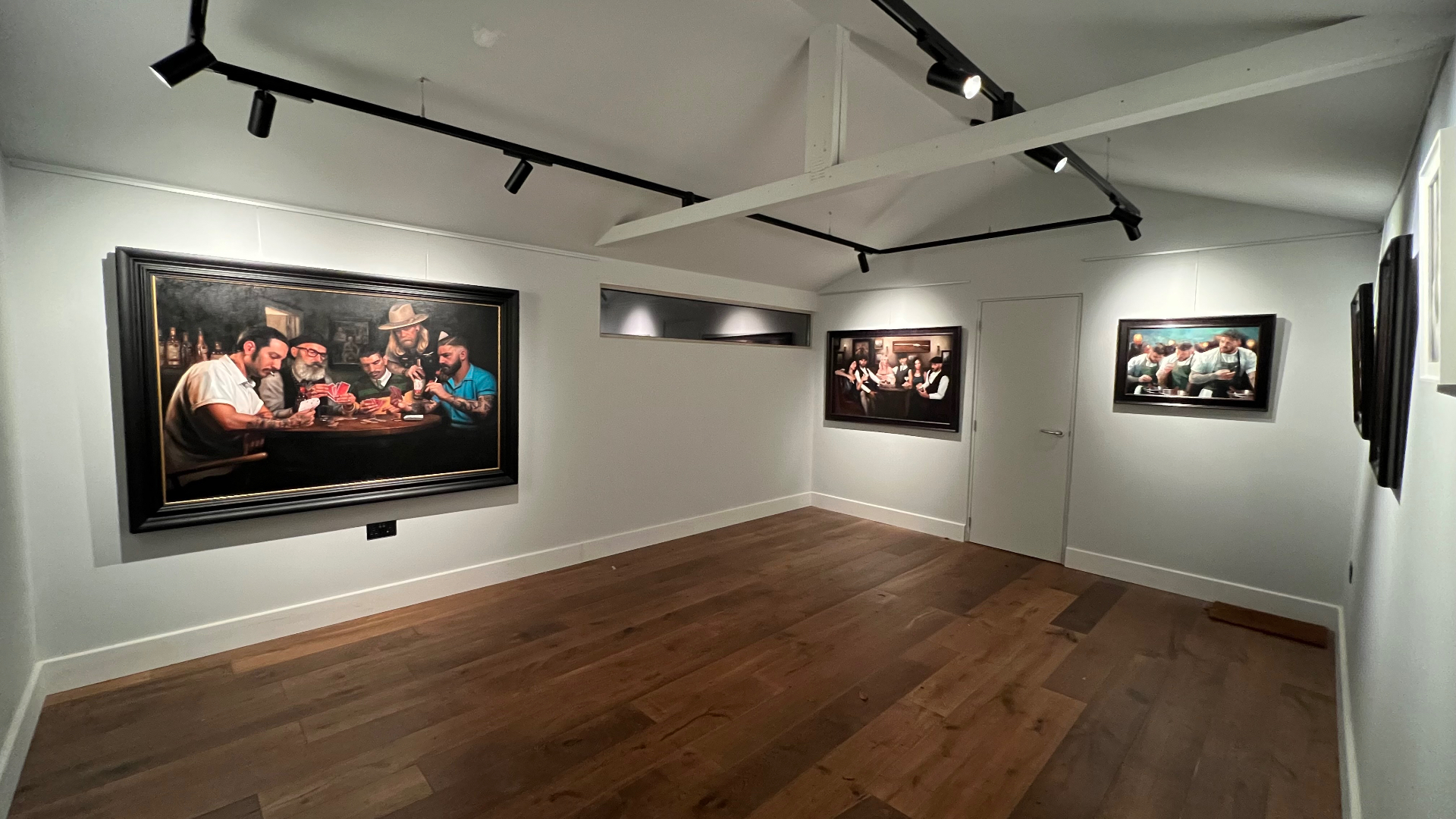
Vince Kamp Studio
A former working outbuilding, now a private gallery where the room recedes and the artwork takes control.
The brief was simple: create a space where Vince Kamp's paintings come to life and transport the viewer into his world. Nothing distracts and nothing competes.
Chiaroscuro designed, installed and commissioned a flexible lighting system built around visual hierarchy, exceptional colour rendering and precise scene control, allowing each painting to become the focus while the architecture quietly falls away.
Light is rarely incidental in his work
I first became aware of Vince Kamp's work around 2018. As an art collector I had seen plenty of contemporary work, but there was something different about the gritty realism of his paintings. Within a relatively short period I had bought three large originals and began travelling to London for his exhibition openings.
Through those visits I began to understand more about the way Vince sees the world, and in particular the importance of light within his paintings. It establishes mood, directs attention and gives the scene much of its emotional weight.
That became something of a lightbulb moment for me personally. It reinforced the idea that lighting within an interior could be approached in much the same way: not simply as illumination, but as a tool for shaping atmosphere and bringing a space to life once daylight has disappeared.
Our friendship continued, and when Vince began considering converting part of his working studio into an additional gallery for private viewings, he asked me to become involved.
Everything was visible
The building was first and foremost a working environment. One area provided storage and contained the everyday equipment and materials associated with the studio. Another was where Vince created his paintings.
OSB walls, work benches, equipment, screens, materials and bright overhead fluorescent lighting all occupied the room simultaneously. There was no meaningful visual hierarchy. And because everything demanded attention, very little truly held it.
The paintings were already extraordinary objects, but the environment surrounding them offered no opportunity for them to dominate the experience.
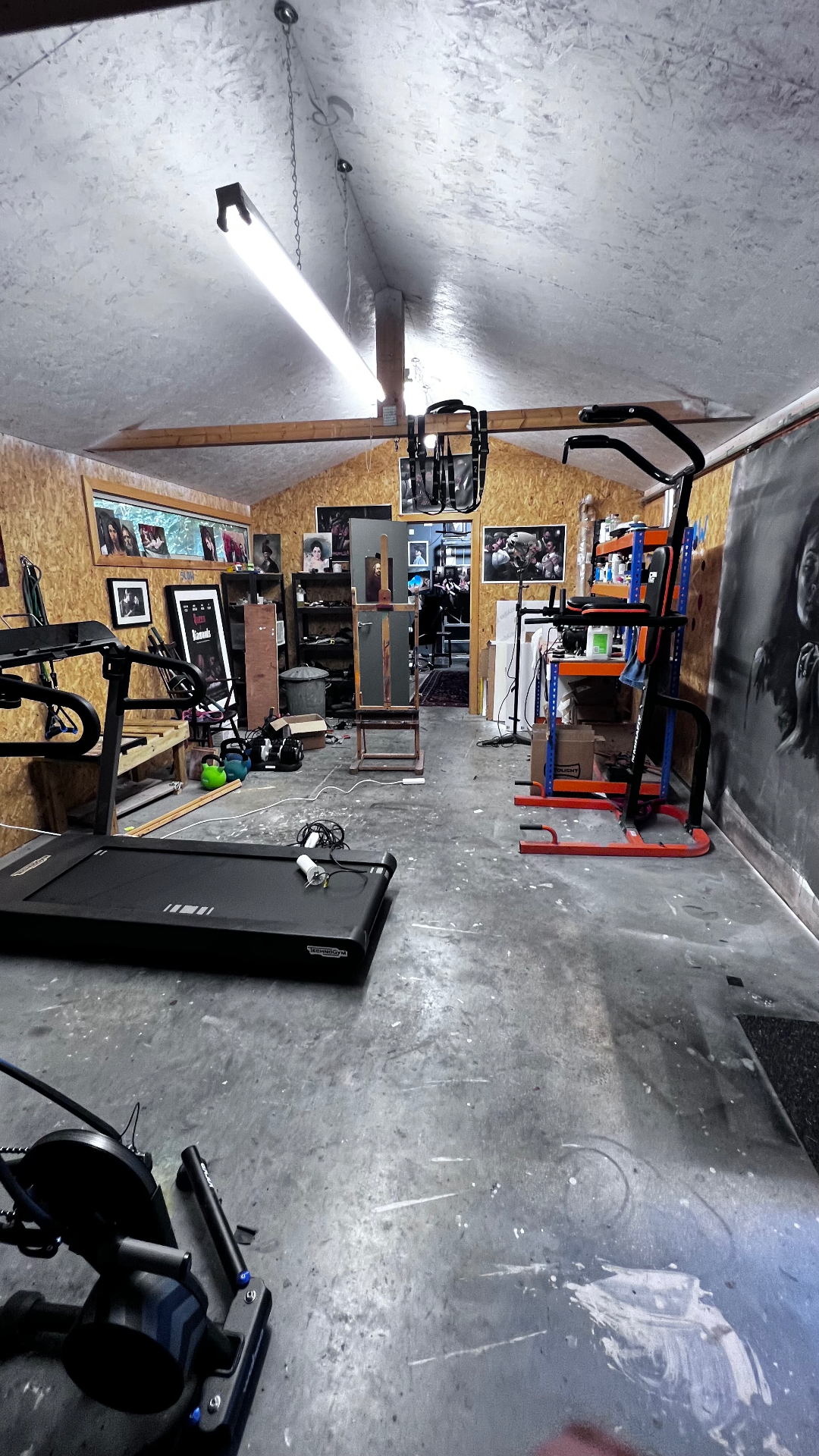
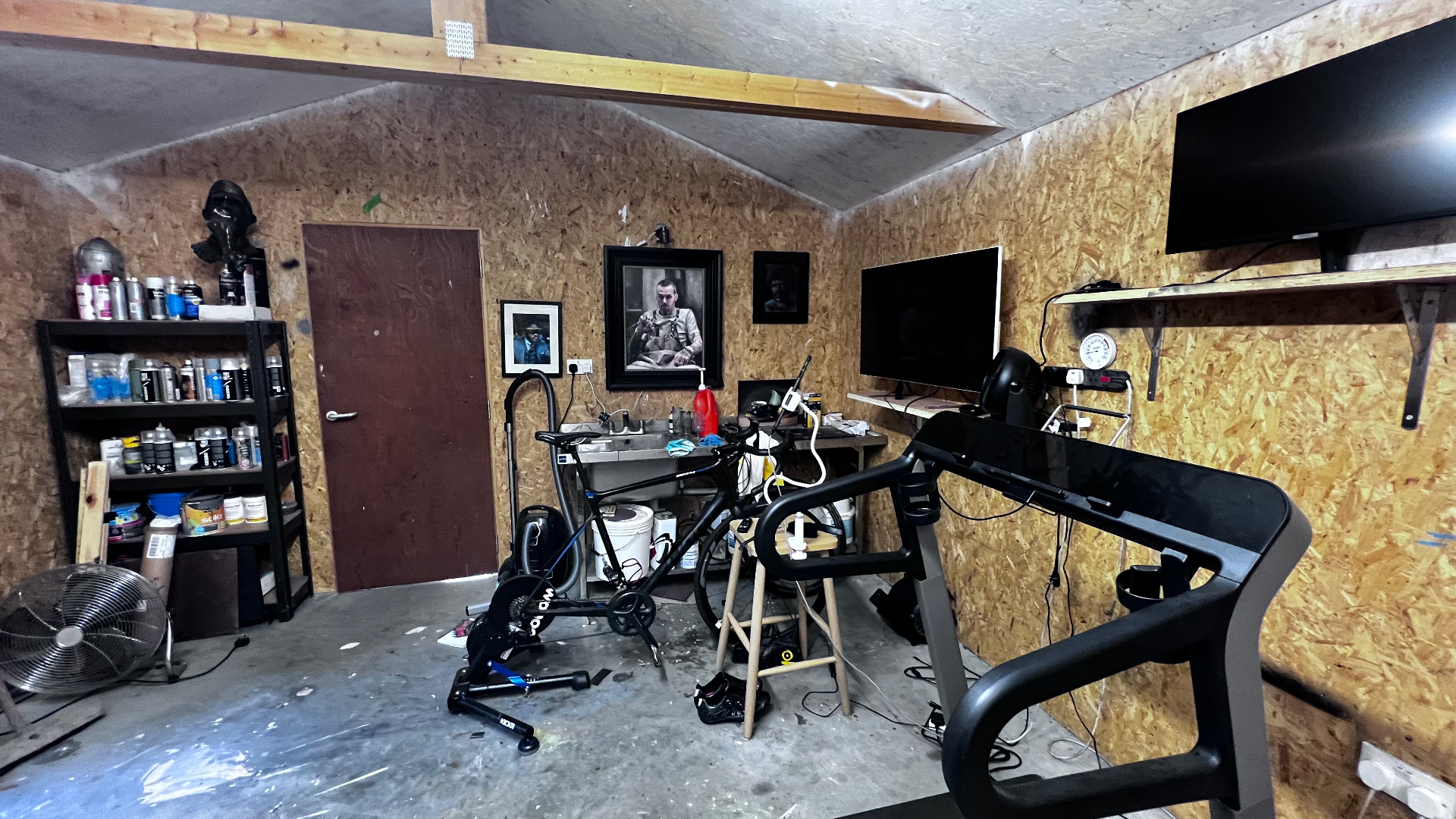
Nothing distracts.
Nothing competes.
Create a space where the artwork comes to life and transports you into Vince's world.
The question was not how brightly the gallery should be lit. It was what deserves to be seen, and what should be allowed to disappear.
That distinction became fundamental to the lighting strategy.
Lighting that moves with the artwork
The existing working studio was retained and its lighting upgraded to give Vince greater control over the conditions in which he paints. The adjoining space was completely reconsidered as a private gallery.
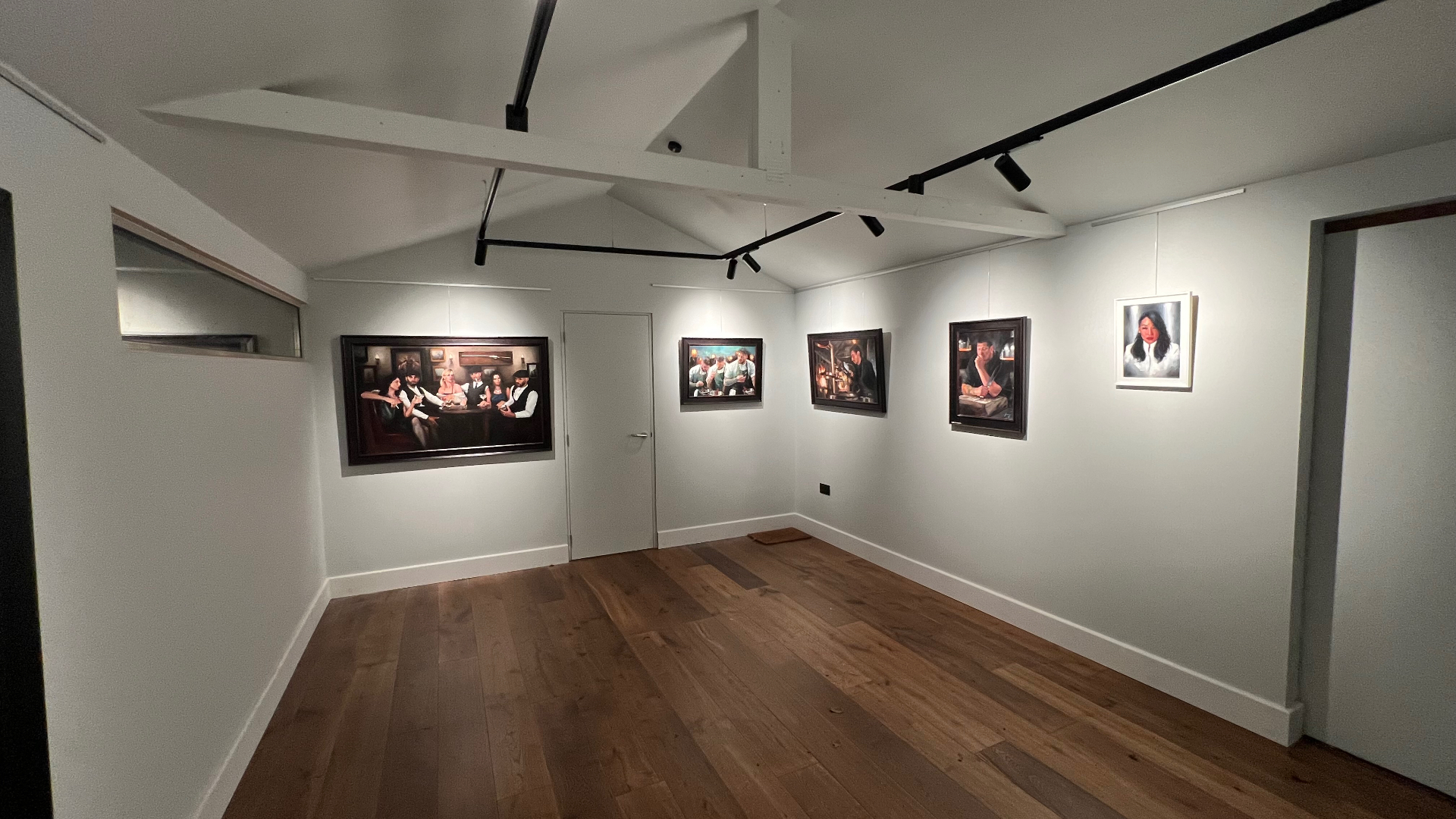
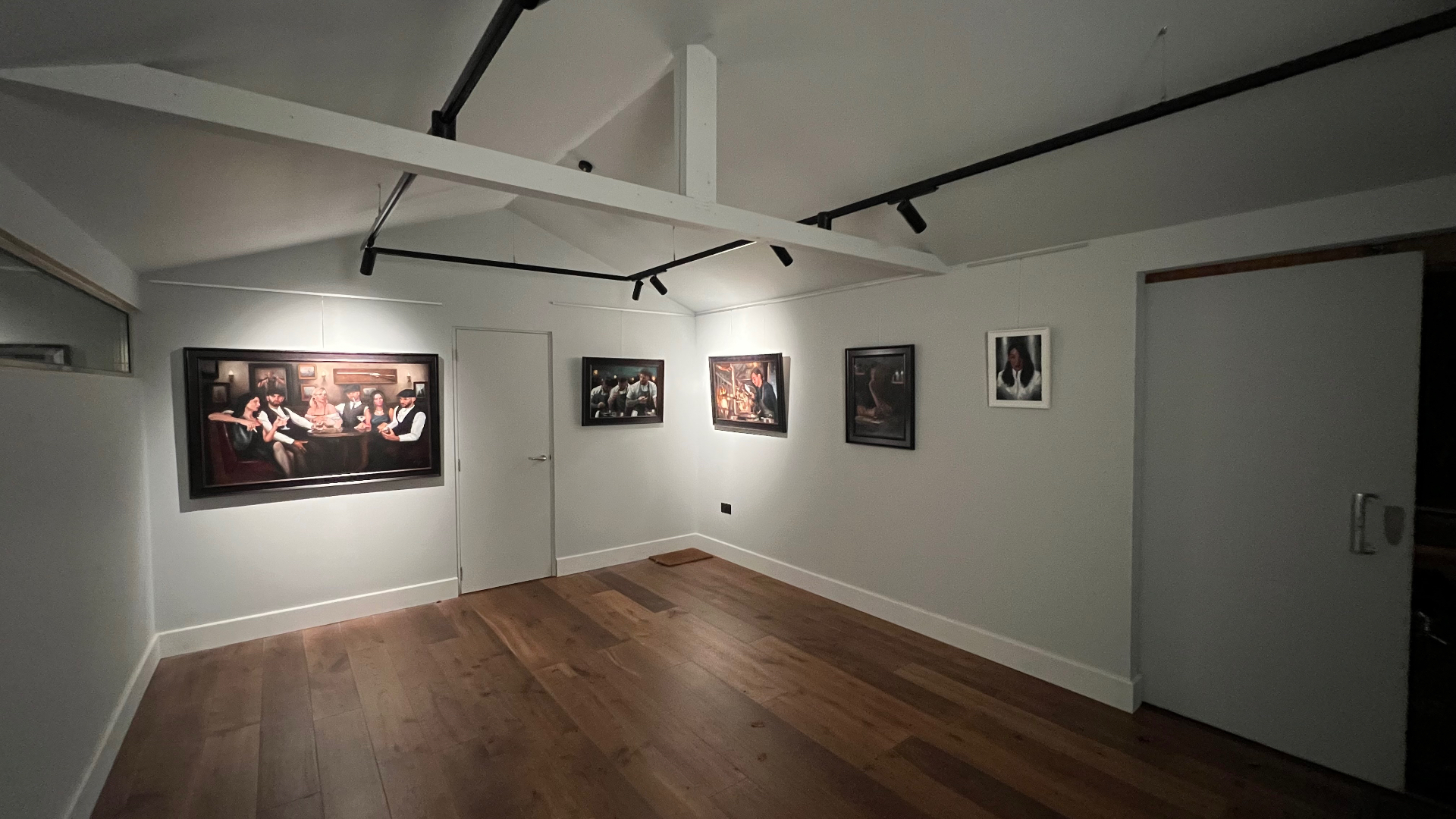
The original surfaces were reboarded and plastered to create a quieter architectural envelope while retaining the vaulted form of the building. A suspended three circuit track system was introduced beneath the ceiling.
The gallery was never intended to be static. Paintings change. New work arrives. Pieces move. Commissions develop. The lighting therefore needed to move with the artwork rather than forcing the artwork to conform to a fixed installation — individual luminaires can be repositioned, refocused and recommissioned as the collection evolves.
The greater challenge was hierarchy
Orluna spotlights were selected for their exceptional colour rendering and their ability to reveal the tonal qualities within Vince's paintings faithfully. Within a gallery, colour rendering is not simply a technical specification: it determines whether the colours, skin tones, shadows and subtle transitions created on the canvas are experienced as intended.
Each painting needed enough light to command attention while the surrounding architecture needed considerably less. The intention was never for the visitor to notice the lighting first. They should notice the artwork.
Light simply determines where the eye travels and what is allowed to recede.
The atmosphere itself can change
The complete system was integrated with Rako controls, allowing different lighting scenes to be created and commissioned for the way the gallery is used. A private viewing, a conversation about a commission and the practical requirements of a working studio can each require a different balance of light.
Rather than treating lighting as an on or off utility, scene control allows the atmosphere of the space itself to change.
Chiaroscuro designed, supplied, installed, focused, programmed and commissioned the complete lighting system.
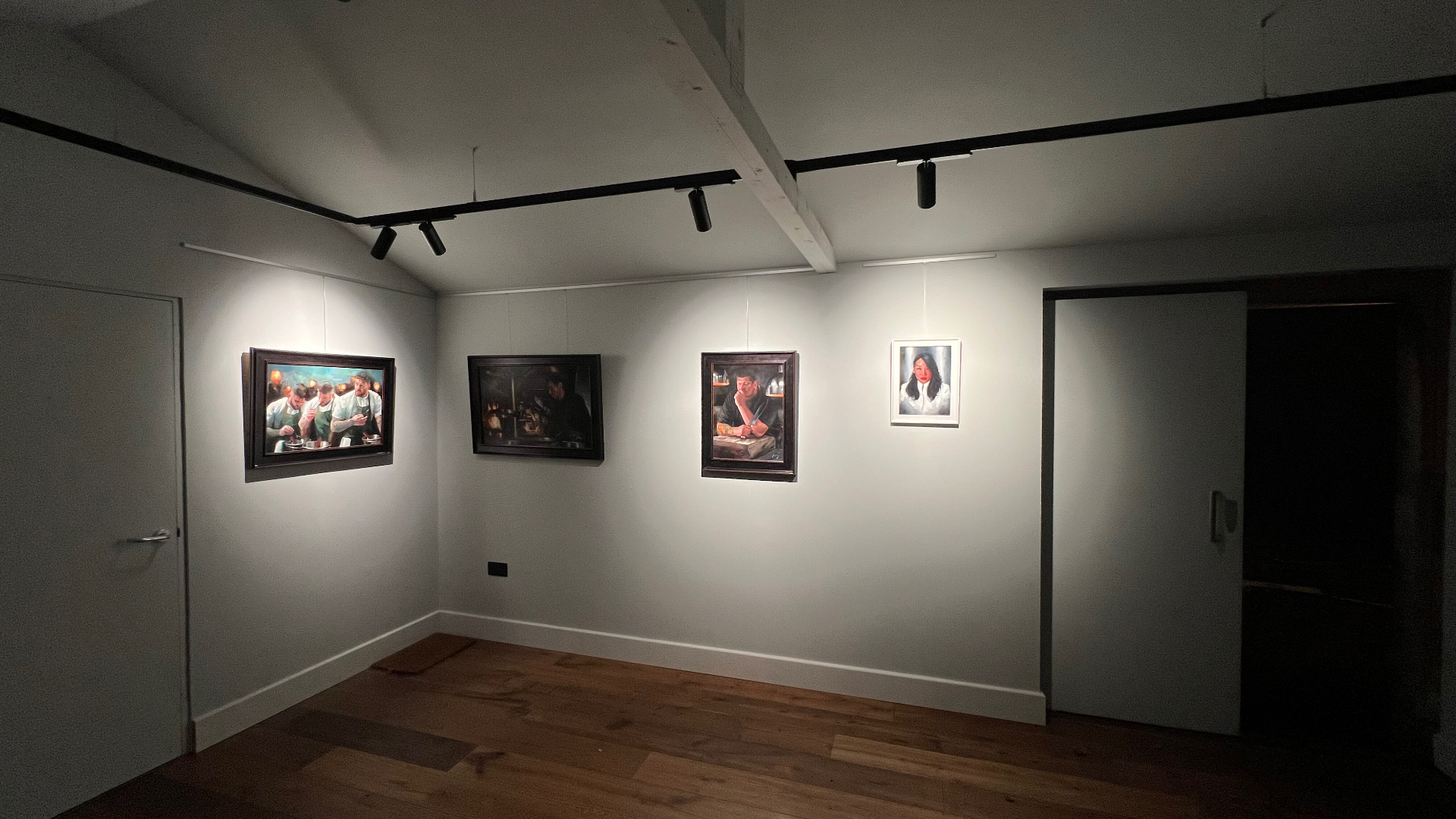
Where there was once visual noise, there is now restraint.
Where every object once occupied approximately the same visual plane, the paintings now establish their own hierarchy. The timber floor brings warmth to the room. The white architectural envelope becomes quiet. The black track provides flexibility without becoming the subject. And the paintings carry the space.
The gallery now operates as both a working studio and a private viewing space where collectors can experience existing work and discuss commissions directly with Vince.
The room recedes.
The artwork takes control.
Client response
After completion, Vince remarked that he had never seen his artwork look as good in any of the galleries in which he had previously exhibited.
The lighting is not ultimately the subject of the finished gallery. The atmosphere is. Light is simply the material used to create it.
What should your space feel like after dark?